Workers' Compensation vs. Personal Injury Claims in Denver - What Every Injured Worker Needs to Know
Getting hurt on the job in Denver leaves you facing two distinct legal paths, and choosing the wrong one can cost you thousands of dollars in recoverable damages. Workers' compensation and personal injury lawsuits operate under separate rules, separate timelines, and separate damage structures. Firms like Adcocates personal injury attorneys regularly handle workplace injury personal injury claim Denver cases, and they point out that understanding which path applies to your situation is the first practical step after a workplace injury.

How Workers' Compensation Works in Colorado
Colorado requires almost every employer to carry workers' compensation insurance, which pays benefits to injured employees regardless of fault. You do not need to prove your employer did anything wrong. Benefits cover medical treatment, a portion of lost wages, and permanent impairment ratings if your injury leaves lasting limitations.
The tradeoff is significant. Colorado workers' compensation is generally the exclusive remedy against your employer, meaning you typically cannot also sue your employer in civil court. You trade the right to a full lawsuit for a faster, no-fault benefit system. Pain and suffering damages are not available through workers' comp.
What Benefits Are Actually Available
Temporary total disability pays roughly two-thirds of your average weekly wage while you cannot work. Permanent partial disability pays a lump sum or scheduled benefit if your injury causes lasting impairment. Medical benefits cover all reasonably necessary treatment related to your injury, with no deductible or copay.
The two-year statute of limitations under Colorado workers' compensation runs from the date of injury or the date of the last compensation payment, whichever is later. Missing that window forecloses your claim entirely, so reporting your injury to your employer promptly is critical.

What Is a Personal Injury Claim for a Workplace Injury
A personal injury claim is a civil lawsuit filed in court against a party whose negligence caused your injury. In most workplace injuries, your employer is shielded by workers' comp exclusivity. However, third parties present at the job site are not protected by that rule.
If a subcontractor's negligence caused your fall, if a defective piece of equipment malfunctioned, or if a delivery driver caused a collision during your work shift, you can pursue a personal injury lawsuit against that outside party. This matters because civil lawsuits allow recovery for pain and suffering, full lost earning capacity, and other damages that workers' comp does not cover.
The Difference in Recoverable Damages
Workers' comp is designed for efficiency, not full compensation. A personal injury lawsuit aims to make you whole. That includes economic damages like all future medical costs and lost income, plus non-economic damages like chronic pain, emotional distress, and reduced quality of life.
Serious workplace injury cases involving third-party defendants regularly settle in the $250,000–$1,000,000+ range in Denver, particularly when commercial contractors or equipment manufacturers are involved. Workers' comp benefits, by contrast, are capped by statutory formulas tied to your wage and impairment rating.

Work Injury Claim vs. Workers Compensation - Can You File Both
Yes, you can pursue both a workers' compensation claim and a personal injury lawsuit simultaneously, as long as a third party outside your employer caused or contributed to your injury. Your workers' comp insurer will likely assert a subrogation lien on your personal injury recovery, meaning they get reimbursed for benefits paid from your civil settlement. A Denver personal injury lawyer can negotiate that lien to maximize what you keep.
Filing both claims requires careful coordination. Statements made in one proceeding can surface in the other. Experienced Denver personal injury lawyers manage this parallel process regularly and know where the conflicts arise.

Construction Worker Injury Claim Denver - Special Considerations
Construction sites involve multiple employers, subcontractors, equipment vendors, and property owners operating in the same space. That complexity creates more potential third-party defendants than most other workplace environments. A Denver construction worker who is injured on a multi-contractor project often has both a workers' comp claim against their direct employer and viable personal injury claims against other parties on site.
Federal OSHA regulations and Colorado-specific safety codes establish baseline duties for site safety. Violations of those standards can serve as evidence of negligence in a civil lawsuit. General contractors and property owners can also face premises liability under C.R.S. § 13-21-115 if their control over the site contributed to the hazard.
Scaffolding, Equipment, and Product Liability
Defective scaffolding, power tools, or heavy machinery can support a product liability claim against the manufacturer or distributor, entirely separate from any employer relationship. Product liability claims do not require proving the manufacturer intended harm, only that the product was unreasonably dangerous. These claims can be filed alongside a workers' comp claim without conflict.
Construction accident settlements in Denver involving serious orthopedic injuries, traumatic brain injuries, or amputations frequently exceed the ranges typical of standard car accident cases, given the severity of injuries and the layers of commercial insurance involved.

Colorado's Fault Rules and How They Apply
Colorado is an at-fault state, meaning the party responsible for causing your injury bears financial liability in a personal injury case. Colorado follows modified comparative negligence with a 50% bar under C.R.S. § 13-21-111. If you are found to be 50% or more at fault, you recover nothing in your civil claim. If your share of fault falls below that threshold, your damages are reduced proportionally by your percentage of fault.
Workers' comp is different: fault is irrelevant. Even if you made a mistake that contributed to your own injury, you still receive workers' comp benefits in most cases. That no-fault structure is part of why employers accepted the exclusivity rule when the system was established.
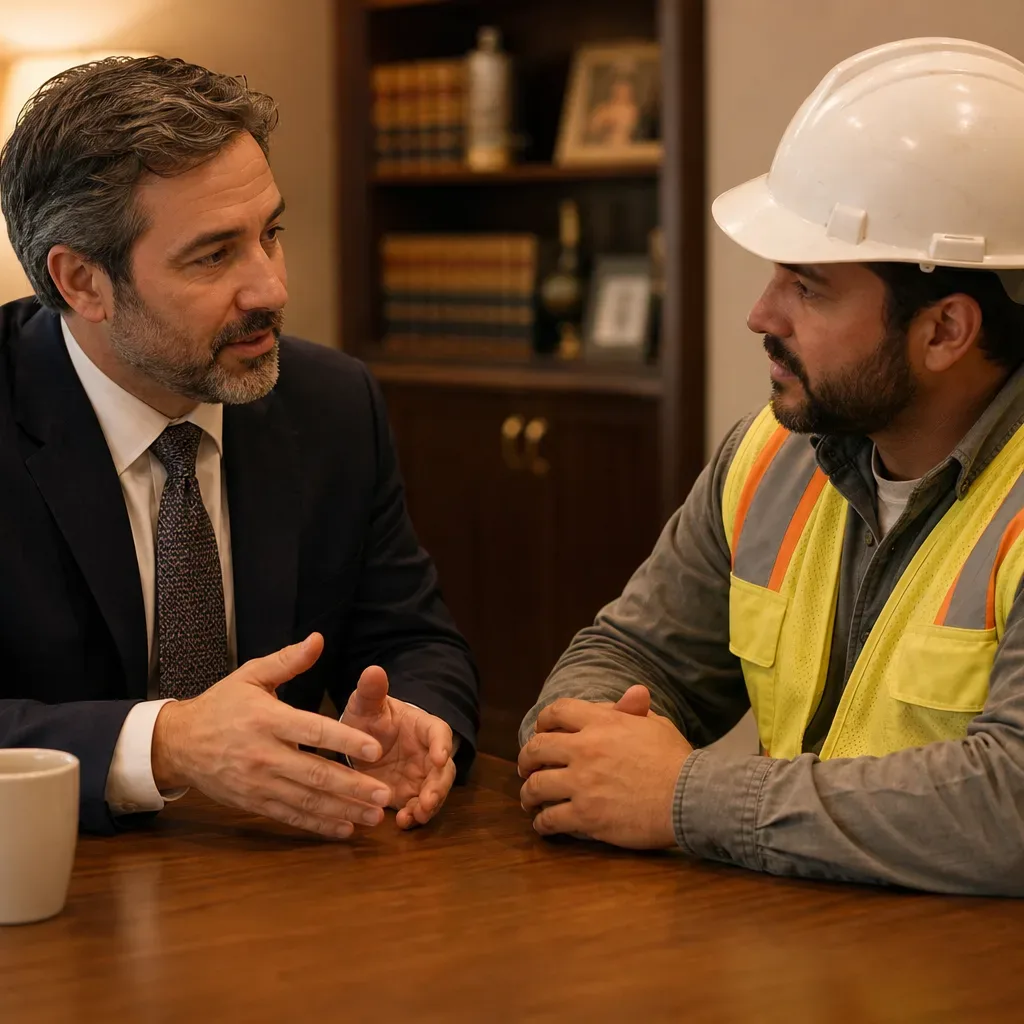
How a Denver Personal Injury Lawyer Can Help
Personal injury lawyers in Denver who handle workplace injury cases typically work on contingency, collecting 33%–40% of any settlement or verdict. No fee is charged if there is no recovery. That structure lets injured workers access experienced legal help without any upfront cost, which matters when medical bills are already mounting.
A lawyer's first job is identifying every party whose negligence contributed to your injury. That investigation often uncovers third-party defendants that injured workers would never have considered. After a serious workplace injury, an attorney should be contacted within days, not weeks, since evidence on active construction sites disappears fast.
Colorado's personal injury statute of limitations is two years from the date of injury under C.R.S. § 13-80-102. That clock starts immediately. Two years sounds long, but gathering evidence, retaining experts, and filing a lawsuit before the deadline requires time. Waiting until the final months creates real legal risk.
When Workers' Comp Alone Is Not Enough
Workers' compensation was never designed to fully replace what a serious injury takes from you. Lost career opportunities, chronic pain, and the impact on your family are real losses that the benefit formulas simply do not capture. When a third party's negligence put you in harm's way, a personal injury lawsuit is the mechanism that accounts for those losses.
Denver personal injury lawyers handling workplace injury cases can typically respond to your inquiry within 24 hours. Getting a professional assessment of whether a third-party claim exists costs nothing under a contingency arrangement and can make a decisive difference in your financial recovery.

Frequently Asked Questions
What Is a Workplace Injury Personal Injury Claim in Denver?
A workplace injury personal injury claim in Denver is a civil lawsuit filed against a third party whose negligence caused your on-the-job injury. Unlike workers' compensation, which pays benefits through your employer's insurer regardless of fault, a personal injury claim targets someone outside your employer relationship, such as a subcontractor, equipment manufacturer, or negligent driver. It allows you to recover pain and suffering damages, full lost earning capacity, and other compensation that workers' comp does not cover.
What Is the Difference Between a Work Injury Claim and Workers' Compensation?
Workers' compensation is a no-fault insurance benefit paid by your employer's insurer that covers medical bills and a portion of lost wages, but not pain and suffering. A work injury claim, in the personal injury sense, is a civil lawsuit against a negligent third party that seeks full damages including non-economic losses. Colorado workers' compensation is generally the exclusive remedy against your employer, but it does not protect outside parties whose negligence contributed to your injury. You can pursue both a workers' comp claim and a personal injury lawsuit at the same time if a third party is involved.
What Should a Construction Worker Know About Filing an Injury Claim in Denver?
Denver construction sites involve multiple employers, subcontractors, equipment vendors, and property owners, which creates multiple potential third-party defendants beyond your direct employer. A construction worker typically files a workers' comp claim against their employer and may also have personal injury claims against other contractors, site owners, or equipment manufacturers. Colorado's premises liability statute, C.R.S. § 13-21-115, can hold property owners and general contractors responsible when their control over site conditions contributed to the hazard. Evidence on active construction sites disappears quickly, so contacting a personal injury lawyer within days of an injury is advisable.
Can You Sue Your Employer Directly After a Workplace Injury in Denver?
In most cases, no. Colorado workers' compensation is generally the exclusive remedy against your employer, which means you cannot also file a personal injury lawsuit against them in civil court. Narrow exceptions exist for intentional acts, but they rarely apply to typical accident scenarios. If a third party other than your employer caused or contributed to your injury, however, a separate civil lawsuit against that party is fully available alongside your workers' comp claim.
How Long Do You Have to File a Workplace Injury Claim in Colorado?
Colorado's personal injury statute of limitations is two years from the date of injury under C.R.S. § 13-80-102, which applies to third-party civil lawsuits. For workers' compensation specifically, you have two years from the date of injury or the date of the last compensation payment, whichever is later. These are separate deadlines governed by different rules. Missing either deadline can permanently bar your right to recover, so reporting your injury promptly and consulting a lawyer early are both essential steps.