Slip and Fall Accidents in Denver Retail Stores and Grocery Stores

How Grocery Store Liability Works in Colorado
Wet floors, spilled produce, misplaced floor mats, and overcrowded aisles cause serious injuries every day in Denver's grocery and retail stores. When a store's negligence creates a dangerous condition, Colorado law gives injured shoppers the right to seek compensation. The legal framework governing these cases is Colorado's premises liability statute, C.R.S. § 13-21-115, which sets different duties of care based on your status as a visitor.
Customers are classified as invitees, the highest protected category under Colorado law. That means the store owes you a duty to inspect the premises, identify hazards, and either fix them or warn you before you encounter them. A store that ignores a known spill or fails to run reasonable inspection rounds has breached that duty.
What You Must Prove to Win Your Claim
Four elements form the backbone of any grocery store slip and fall claim in Denver. First, the store owed you a duty of care as an invitee. Second, the store breached that duty by allowing a dangerous condition to exist. Third, that condition directly caused your fall.
Fourth, you suffered measurable injuries or losses as a result.
Proving the store knew, or should have known, about the hazard is often the hardest part. Evidence like surveillance footage, incident reports, employee maintenance logs, and witness statements can establish how long the dangerous condition existed before your fall.

Common Causes of Slip and Fall Injuries in Retail Stores
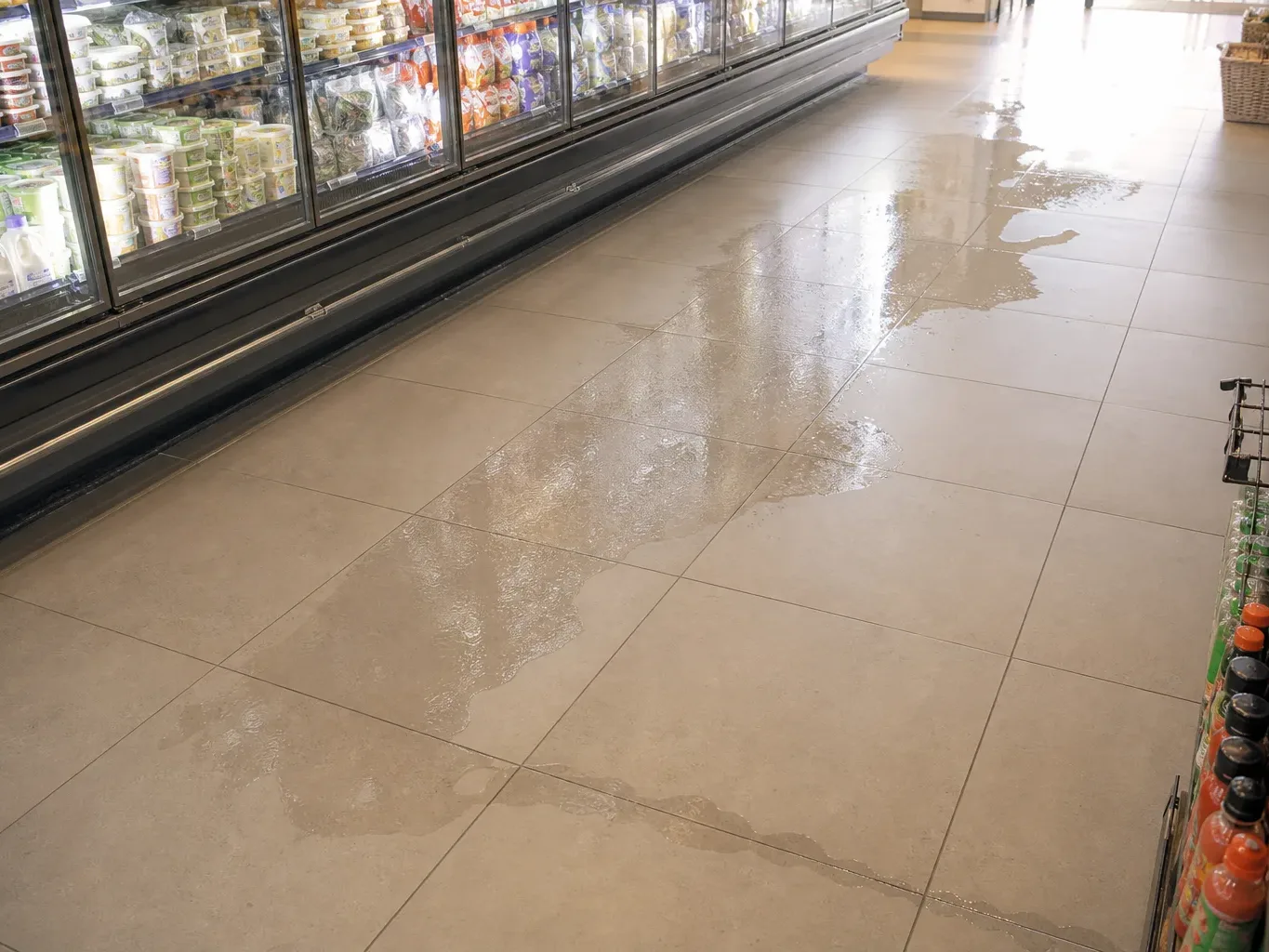
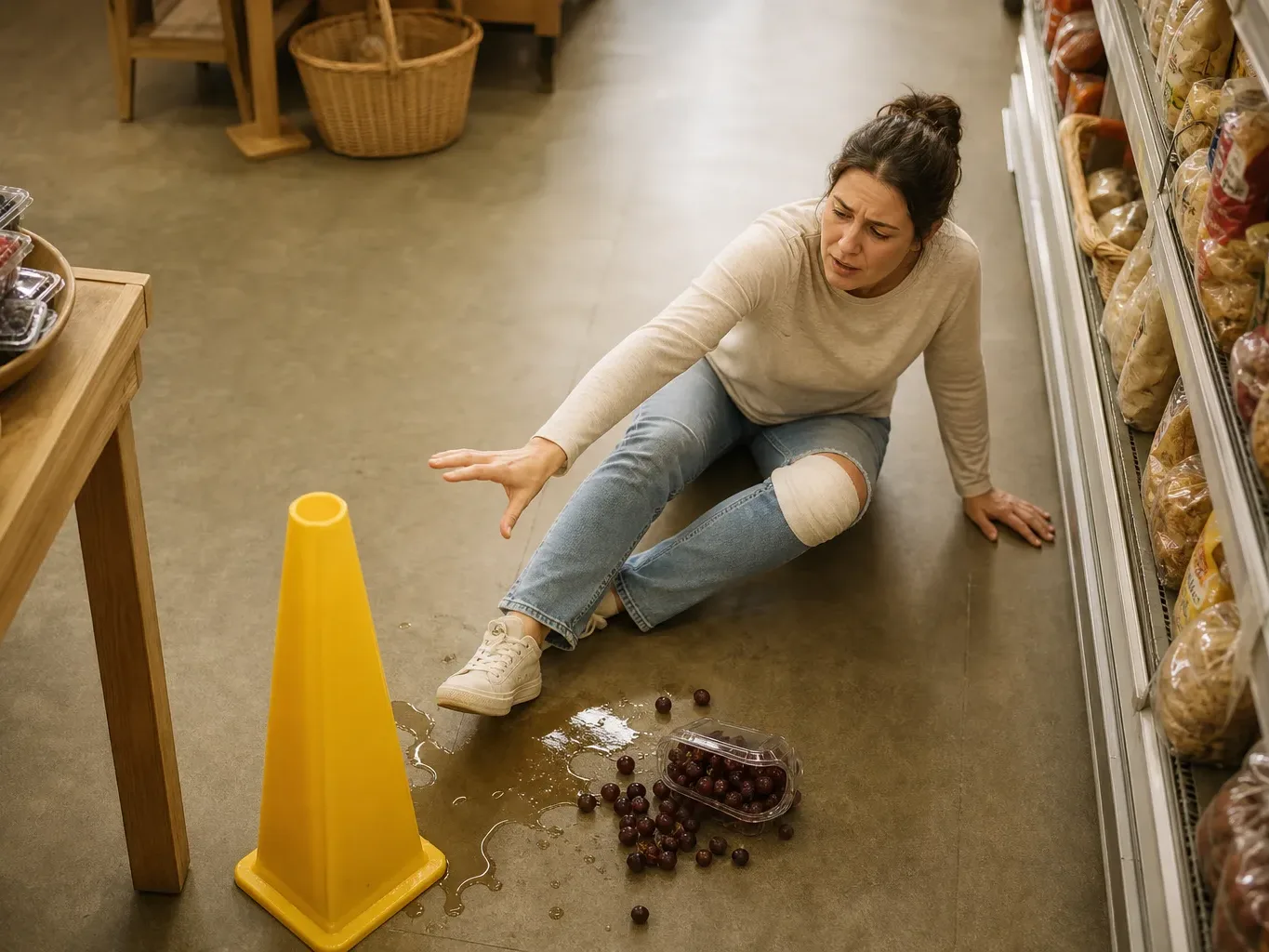
Leaked refrigeration units create puddles that spread across tile floors without any visual warning. Produce sections are another frequent problem: dropped lettuce, grapes, and other items make floors slick in seconds. Outdoor parking lots and store entrances also generate claims in Colorado winters when ice and snow track inside on shoppers' shoes and go unaddressed by staff.
Aisle hazards include boxes left by stockers, display merchandise placed too close to walkways, and torn or raised floor mats near entrances. Any of these can send a shopper to the ground with enough force to cause fractures, torn ligaments, or head injuries.
What to Do Immediately After a Fall
Report the incident to a store manager before you leave the premises. Ask for a written copy of the incident report, or at minimum note the manager's name and the time the report was filed. A store's internal records become critical evidence during a claim, and having documentation that the incident was reported on the day it occurred protects your credibility.
Photograph the hazard that caused your fall, the surrounding area, and any wet floor signs, or the absence of them. Seek medical attention the same day, even if pain feels manageable. A gap between the fall and your first medical visit gives insurers ammunition to argue your injuries were not caused by the incident.
Preserving Surveillance Footage
Most retail stores record their interiors continuously, but footage is typically overwritten within 30–72 hours. Your attorney can send a spoliation letter demanding the store preserve all video from the date of your fall. Acting quickly on this step can make or break your ability to prove liability.
Grocery Store Slip and Fall Settlement Ranges
Settlements in Denver grocery and retail store cases typically fall between $30,000 and $150,000. The actual figure depends on how clear the store's liability is, the severity of your injuries, your medical expenses, and whether you missed time from work. Cases involving fractures, surgery, or lasting impairment consistently settle toward the higher end of that range.
Colorado follows a modified comparative negligence rule, with a 50% bar under C.R.S. § 13-21-111. If you are found to be less than 50% at fault, your compensation is reduced by your percentage of fault but not eliminated. A shopper found 30% at fault for a $100,000 claim recovers $70,000. At 50% or more at fault, the claim is barred entirely.
Medical Expenses and Lost Wages
Compensation can cover emergency room visits, imaging, surgery, physical therapy, prescription costs, and any future treatment tied to the injury. Lost wages apply if your injuries kept you away from work during recovery. Severe cases may also support claims for reduced earning capacity if you cannot return to the same type of work.

The Role of Insurance and Store Legal Teams
Large grocery chains and retail stores carry commercial general liability policies with significant coverage limits. That sounds reassuring, but it also means the store's insurer has experienced adjusters whose job is to minimize payouts. Early recorded statements, quick settlement offers, and requests for medical authorization releases are tactics designed to reduce what you ultimately receive.
Decline to give a recorded statement to the store's insurer before speaking with a personal injury lawyer. A low initial offer is not a reflection of your case's actual value. Accepting it typically means signing a release that prevents you from seeking additional compensation if your injuries worsen.
Filing Deadlines for Denver Slip and Fall Claims
Colorado's statute of limitations for personal injury claims, including slip and fall cases, is two years from the date of injury under C.R.S. § 13-80-102. Missing that deadline almost always means losing the right to sue, regardless of how strong your case is. Two years may sound like plenty of time, but evidence degrades, witnesses become harder to locate, and surveillance footage disappears long before the deadline.
Starting the process early gives your attorney time to conduct a thorough investigation, gather records, and negotiate from a position of strength rather than urgency.
Working with a Denver Personal Injury Lawyer
Most Denver personal injury lawyers handle grocery store slip and fall claims on a contingency fee basis, meaning no fee is charged unless you recover compensation. Standard contingency fees run between 33% and 40% of the settlement or verdict, and that percentage may increase if your case goes to trial. You pay nothing upfront and owe nothing if the case does not succeed.
A lawyer experienced in premises liability cases knows how to obtain maintenance records, depose store employees, and counter the arguments insurers routinely make about comparative fault. Retaining counsel early, before you speak with the store's insurance company, puts you in a substantially better position from the start.

Frequently Asked Questions
What Is Grocery Store Liability for a Slip and Fall?
In Colorado, grocery stores owe customers the highest duty of care under C.R.S. § 13-21-115 because shoppers are classified as invitees. The store must inspect the premises regularly, identify hazardous conditions like wet floors or spilled product, and either fix them or warn customers before they cause harm. If the store knew or should have known about the hazard and failed to act, it can be held liable for resulting injuries.
What Is the Typical Slip and Fall in Grocery Store Settlement Amount?
Settlements for grocery store slip and fall claims in Denver typically range from $30,000 to $150,000. Cases involving clear liability and serious injuries such as fractures or surgery tend to settle toward the higher end. Your final recovery depends on your medical expenses, lost wages, the extent of the store's fault, and whether you share any comparative fault under Colorado's modified comparative negligence rule.
How Long Do I Have to File a Slip and Fall Claim in Denver?
Colorado's statute of limitations for personal injury claims, including slip and fall cases, is two years from the date of injury under C.R.S. § 13-80-102. Missing this deadline generally ends your right to seek compensation in court. Acting early matters because surveillance footage is often overwritten within days and witness memories fade quickly.
What Should I Do Immediately After a Slip and Fall at a Grocery Store?
Report the fall to a store manager right away and request a copy of the incident report. Photograph the hazard, the surrounding area, and any absent or present warning signs. Seek medical attention the same day, even if injuries seem minor, and contact a Denver personal injury lawyer before giving any recorded statement to the store's insurance company.
Does It Matter If I Was Partly at Fault for My Grocery Store Fall?
Colorado uses a modified comparative negligence rule with a 50% bar under C.R.S. § 13-21-111. If you are found less than 50% at fault, your compensation is reduced by your percentage of fault but not eliminated entirely. However, if you are found to be 50% or more at fault, you cannot recover any compensation from the store.